
The AIHA Guideline Foundation (AIHA) and Foundation for Chemistry Research and Initiatives (FCRI) Announce Free Virtual Courses on Occupational Limit Derivation and Utilization.
Course Aims: The course is co-hosted by the AIHA and FCRI. The course is being offered as part of AIHA GF OEL Committee mission to increase knowledge of the basis for and interpretation of occupational exposure limits.
As part of our joint commitment to advancing OEL science, these courses are part of a broader program. This program includes a harmonization workshop to be held in February 2027 and the 2027 Exposure Limits and Acceptable Risk Symposium on May 22-23, 2027, in conjunction with AIHA Connect 2027.
Session 1: Derivation of Occupational Exposure Limits
Date and time: Thursday October 29, 1:00 to 4:00 PM ET
Course Description: This course provides an overview of current science and best practices in the derivation of occupational exposure limits (OELs). The course explores how diverse lines of scientific evidence are evaluated and integrated within risk assessment frameworks to develop health-based exposure recommendations. Emphasis is placed on the scientific principles, uncertainties, assumptions, and professional judgments that underpin modern OEL derivation. The course also examines the strengths and limitations of available data and the approaches used to translate scientific findings into health-based exposure limits. The course content will be divided into modules with structured breaks.
Session 2: Selection and Application of Occupational Exposure Limits
Date and time: Thursday November 12, 1:00 to 4:00 PM ET
Course Description: This course provides an overview of current practices in the selection and application of occupational exposure limits (OELs). The course explores how OELs are evaluated and integrated within occupational health risk assessment frameworks to support workplace exposure assessment and risk management decisions. Emphasis is placed on the practical considerations, uncertainties, assumptions, and professional judgments that influence OEL selection and use. The course also examines the interpretation and application of OELs in complex occupational exposure scenarios, including chemical mixtures, non-routine exposure conditions, biological monitoring, multi-route exposures, hazard notations, and aggregate or cumulative exposures. Structured breaks will be incorporated.
Course Fee: FREE.
Registration is required. Register for both courses at:
Overall Course Structure: The courses will be virtual. A link will be provided upon registration. Each course will include 2.5 contact hours. There will be interactive elements in each topic session via polling and chat features.
Participants: The intended participants are occupational health, toxicology, and product stewardship professionals who have responsibility for occupational exposure limit (OEL) derivation, review, selection, and implementation. The content is planned for intermediate to advanced practice level.
Additional Resources: The PDF slide decks will include a section of additional reading and key references.
Course Instructors: The courses will be led by experts from the AIHA Guideline Foundation OEL Committee.
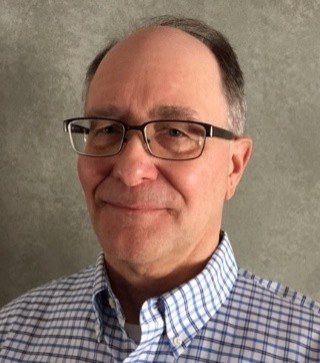
Robert Roy, Ph.D., DABT, Fellow ATS
Dr. Roy retired in July 2023 from the 3M EHS/Product Stewardship Group as a Corporate Staff Scientist. At 3M he was responsible for the toxicology and regulatory toxicology activities of numerous industrial, consumer and medical Divisions and was Chair of the 3M Prop65 Committee and the 3M Occupational Exposure Limits (OEL) Committee. After retirement, he started his own toxicology firm, Northland Toxicology Consultants, LLC, where he is the Managing Principal Toxicologist. His current professional focus is on developing human health risk (safety) assessments and developing various health-based values including OELs, ADIs/PDEs, DNELS/DMELs, NSRLs/MADLs; conducting pre-clinical biocompatibility/health hazard testing of medical devices (ISO 10993, etc.); regulatory toxicology (Prop65; OSHA; CPSC; EPA TSCA; EPA FIFRA; REACH; GHS); HazCom (SDS and label preparation; worker training); and toxicology training and education all for the industrial chemical, consumer product, pharmaceutical and medical device sectors. Rob is board-certified in toxicology (DABT), a past member of the American Board of Toxicology Board of Directors, an elected Fellow (and currently President) of the Academy of Toxicological Sciences (Fellow, ATS), an Adjunct Professor of Toxicology at the University of Minnesota where he teaches graduate-level classes in toxicology and industrial hygiene and advises graduate students and is a member of the American Industrial Hygiene Association (AIHA) OEL Committee and the AIHA Emergency Response Planning Guidelines (ERPG) Committee.
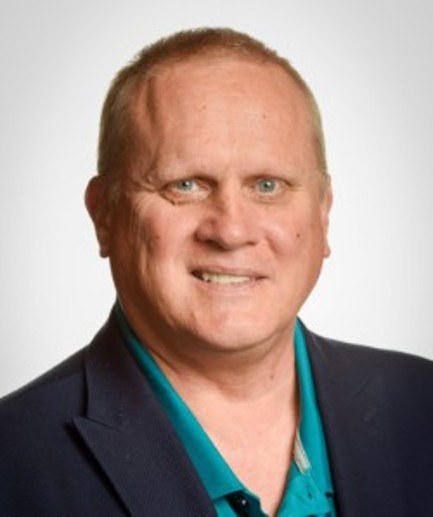
Robert Skoglund, Ph.D., DABT, CIH, CPPS
Dr. Skoglund is Head of Product Safety and Regulatory Affairs for Covestro LLC, a leading global manufacturer of high-performance polymer materials. With 40 years of experience in environment, health, and safety (EHS), he has extensive expertise in regulatory and applied toxicology, environmental chemistry, industrial hygiene, product stewardship, and global chemical management regulations. Dr. Skoglund has served as an adjunct faculty member in the Schools of Public Health at the University of Minnesota and Indiana University and has advised organizations including the Occupational Safety and Health Administration (OSHA), the U.S. Environmental Protection Agency (EPA), the National Institute of Environmental Health Sciences (NIEHS), the National Academies of Sciences, Engineering, and Medicine, and the European Chemicals Agency (ECHA). He has authored numerous peer-reviewed publications, abstracts, and book chapters and is active in several professional, scientific, credentialing, and trade organizations, including serving on the Board of Directors of the Board for Global EHS Credentialing and the Editorial Board of Toxicology and Industrial Health. Dr. Skoglund earned both his M.S. and Ph.D. from the University of Minnesota and is board certified in toxicology, industrial hygiene, and product stewardship.
Andrew Maier, MS, Ph.D., CIH, DABT, Fellow AIHA, Fellow ATS
The Course Director is Dr. Maier with over 30 years of experience in developing the science methods for deriving occupational exposure limits. He is former Chair of the AIHA and OARS WEEL Committee, and former NIOSH Fellow where he served on the programs developing the NIOSH Skin notation policy, IDLH methodology, and occupational exposure banding (OEB) tool. He has provided occupational risk assessment training for hundreds of chemical safety professionals from industry, government and other organizations and developed or reviewed OEL values for hundreds of individual substances.
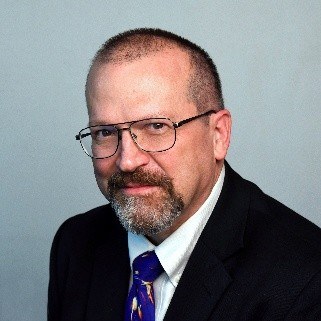
Andrew Anthony Havics, CIH, PE, Fellow AIHA
Mr. Havics is an Honors graduate from Georgia Institute of Technology with a Bachelor’s Degree in Mechanical Engineering. He is a Certified Industrial Hygienist (CIH), and a registered Professional Engineer (PE) with 40 years of experience in environmental, health and safety, building science, and materials science consulting. He is a former Chair of the Workplace Environmental Exposure Limit (WEEL) Committee that has set over 100 exposure limits for hazardous agents. He was member of the AIHA Biological Monitoring Committee and the Biologically Based Environmental Exposure Level (BEEL) working group that created biological exposure limits for chemicals and has presented nationally on biological exposure limit setting and occupational exposure limit development. He is a limited term lecturer at Purdue in West Lafayette and at the McCrone Research Institute in Chicago. He was formerly adjunct faculty at for both IU School of Medicine and IUPUI in Indianapolis. He has performed industrial hygiene studies (including noise, lighting, radiation, etc.) and air sampling for medical facilities, product manufacturers (boats, electronics, metal fabricators, rubber & foams, silica gel, zeolites, paints, plastics, etc.), emergency response teams, pulp and paper mills, aerospace facilities, construction companies, and at hazardous waste sites.