

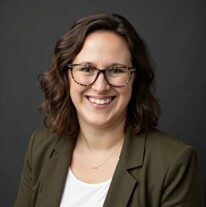
Kelsey Babik, MPH, CIH
University of Illinois Chicago
Equity and Standards Development for Personal Protective Equipment (PPE)
Advisor: Michael Petros, DrPH
Kelsey R. Babik, MPH, CIH, is a contract occupational health and safety specialist currently working for the National Weather Service in their Office of Safety and Environmental and Occupation Health. She holds dual Master’s degrees in Environmental Health and Exposure Science and Environmental Epidemiology from the University of Maryland and the Johns Hopkins University, respectively; a Bachelor’s degree in Molecular Biology from the University of Pittsburgh; and a certificate in Risk Sciences and Public Policy from the Johns Hopkins Risk Institute. She has been an active member of AIHA for more than 10 years, participating in both local section (Potomac) and organization-wide committees and working groups, including the Continuing Education Committee, the Museum and Cultural Heritage Industry Working Group, and the Standards Advisor Panel. Ms. Babik has previously worked as an associate program officer for the National Academies of Science, Engineering, and Medicine; an industrial hygienist at the National Institute for Occupational Safety and Health (NIOSH); and in the pharmaceutical industry. She is currently pursuing a Doctor of Public Health (DrPH) at the University of Illinois Chicago.
Kelsey is seeking volunteers to participate in focus groups on May 19th and 21st, 2026.
Kelsey’s work is reflected in the Defining the Science Member’s Guide as eliminating a barrier to practice associated with protective clothing used for worker protection.
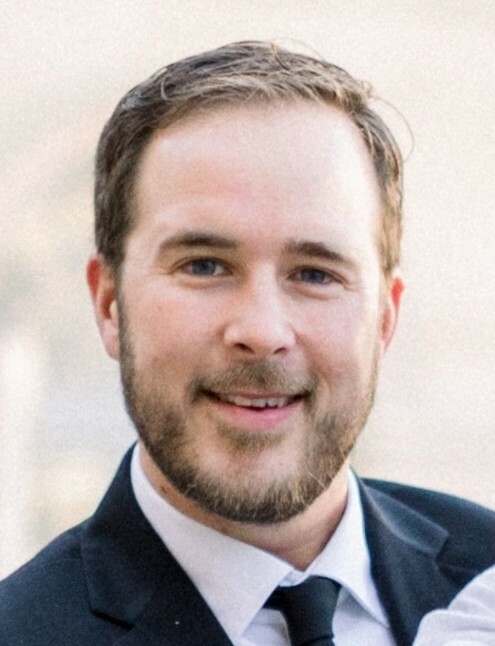
Ryan Hines, CIH, CHMM
Johns Hopkins University Bloomberg School of Public Health
Bayesian Decision Analysis: Creation of Custom Priors and Introduction to the Occupational Exposure Decision Dashboard
Advisor: Gurumurthy Ramachandran, PhD
Ryan Hines is a PhD Candidate in the Department of Environmental Health and Engineering in the Bloomberg School of Public Health at Johns Hopkins University, where his research is focused on occupational exposure modeling and assessment strategies. Ryan is a CIH, CHMM and has worked as an EHS consultant, primarily focusing on the aerospace, precision optics, and metal finishing manufacturing sectors. He is the Secretary of the Chesapeake Local Section of AIHA. He has a bachelor’s degree in environmental systems engineering from the University of Pennsylvania and a Master of Science degree in Occupational and Environmental Hygiene from the Johns Hopkins University Whiting School of Engineering.
Ryan is conducting workshops to train Bayesian Statistical Tool users on a new dashboard and is seeking feedback. Workshops are currently scheduled for April 21st, 2026 and May 13th, 2026. EDA registrants have an opportunity to participate in a workshop scheduled for May 18th, 2026.
Ryan’s work is reflected in the Defining the Science Research Agenda under Improving Exposure Decision Making: Define Appropriate Bayesian Priors.
If you are a student researcher with a project responsive to the research needs identified in the Defining the Science Research Agenda or Member’s Guide, and you could use assistance from AIHA, please contact Michele Twilley, DrPH, CIH, AIHA Chief Science Officer.

The success of OEHS as a profession depends on cutting-edge research, training, and practical application—elements of a self-improving, evolving system. The members of our two organizations are OEHS professionals and academics who identify gaps both in research and the ways practitioners implement health and safety in the workplace. With the ever-increasing pace of new materials being introduced into commerce, identification of those workers producing and utilizing these materials provides an opportunity for research on exposures and outcomes that can help provide the technical basis for health protection programs.
Historically, AIHA has lacked a defined process for helping researchers investigate areas of concern identified by members and allied stakeholders and supporting the incorporation of research results into everyday practice. To this end, the association seeks to define and manage a standing OEHS research-to-practice agenda. Through this agenda, we can help inform and guide practitioners, academics, third-party research organizations, and AIHA volunteer groups toward engagement with critical research topics. Subsequently, AIHA will be able to facilitate the partnerships necessary to accomplish the agenda’s goals. We can then play a more integral role in preparing students to conduct research on these essential topics and practitioners to integrate new findings into their workplace procedures.