
AIHA University Webinar: An Updated Toolbox for Modeling Exposures
Earn 1 Contact Hour

Member $99 | Nonmember $130 | Student $25
Exposure modeling is an emerging, useful, and versatile exposure assessment strategy for OEHS professionals, supporting more informed, data-driven exposure assessments. However, determining the appropriate model and model parameters can be challenging and may serve as barriers to entry. This session aims to address these barriers by introducing a model selection tool, the Exposure Modeling Toolbox, published on AIHA’s Risk Assessment Tools page. The Exposure Modeling Toolbox, which focuses on exposure models that are freely available to the public, provides introductory and comparative information on the section, parameters, and differences between available models. The tool is unique as it primarily focuses on the model selection process.
The presenters will review the toolbox basis, parameters, and demonstrate its application for model selection through a case study. Additionally, other resources for understanding a model’s basis will be identified and reviewed with participants. Whether you’re new to exposure modeling or looking to refine your approach, this session will equip you with practical tools and guidance to enhance your exposure assessment strategies.
Learning Objectives
After this webinar, participants will be able to:
- Explain how the Exposure Modeling Toolbox can be utilized for model selection.
- Identify resources to determine exposure modeling input parameters.
- Demonstrate application of the AIHA Exposure Modeling Toolbox with real-world case studies.
- Recognize some of the key considerations when selecting an appropriate exposure model.
Presenters

Mandie Kramer, MS, CIH, CSP
Mandie Kramer is a Certified Industrial Hygienist and Certified Safety Professional in ToxStrategies' Exposure Sciences practice. She holds a master’s degree in industrial Hygiene and practices in the Twin Cities area, Minnesota. Ms. Kramer has eleven years of experience in product stewardship, industrial hygiene, quantitative exposure modeling, and environmental fate and transport assessments. She specializes in assessing risks associated with occupational, consumer, and general population exposures to a variety of chemicals and products. Her expertise also includes air dispersion modeling to predict community exposures from industrial facilities and excavation sites. She routinely assists clients with exposure assessments for EPA's Toxic Substances Control Act (TSCA) and California's Proposition 65.

Pamela Dopart, PhD, CIH
Pamela Dopart is an occupational and environmental health scientist and CIH who specializes in exposure assessment methods to inform health risk assessments. She has experience measuring, modeling, and evaluating exposures in occupational and environmental settings and from consumer products. Dr. Dopart also has experience developing and evaluating targeted human health risk evaluations in accordance with EPA TSCA guidance and has served as a study coordinator on TSCA Section 4 Test Orders for occupational monitoring studies and consumer product emission testing.
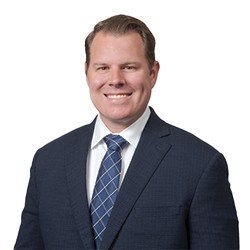
Frank Pagone, PhD, CIH
Frank Pagone has over 10 years of education, research, and environmental, health, and safety consulting. He is also a certified industrial hygienist and certified in Geospatial Analysis and Visualization with a focus on Geographic Information Systems (GIS). Dr. Pagone received his B.S. from Purdue University and both his M.S. in Public Health – Industrial Hygiene and Ph.D. in Public Health from the University of Illinois at Chicago (UIC) where he currently serves as an Adjunct Clinical Assistant Professor. His graduate research topics included human health risk assessment including probabilistic risk assessment, exposure assessment and cancer risk analysis, spatial statistics, and GIS. Dr. Pagone provides support and execution of environmental health and safety services defining, analyzing, characterizing, assessing, and managing occupational and non-occupational risks to human health and the environment and conducts research of a variety of environmental health and safety topics. He has also consulted on data management and analysis including collection of population, health, employment, environmental risk/hazard, and housing data, taught a variety of topics including air and water quality and management, industrial hygiene, and statistics, and assisted with the evaluation of industrial point-source emissions to residential receptor sites in surrounding communities for purposes of assessing risk for both cancer and non-cancer endpoints.
**This live event will be administered in our LMS through zoom webinar. Please view our FAQ for additional information.**